


Ask about the work behind this sky — the clinical LLM infrastructure at Remeda, the evaluation and safety systems, the research, or simply what to read first.
Chapter 00Night — 04:41
Ruike Oliver Hou
AI engineer. Computer Science specialist at the University of Toronto, currently building clinical LLM infrastructure at Remeda.
60-second résumé Selected proof
Scroll — the sky moves with you
Chapter 01First light
Most AI demos are built to impress. The systems I ship are built to be checked — every recommendation carries the evidence behind it, and every failure mode has a test that tries to cause it.

What I work on
- LLM systemsProvider-agnostic orchestration, streaming, retrieval, and adversarial evaluation.
- Product engineeringNext.js, React, Spring Boot, Postgres and pgvector, Docker, Cloudflare Workers.
- Interface craftWebGL2 material rendering and scroll-driven motion, published as open-source packages.
Education
University of Toronto
BSc, Computer Science Specialist (Co-op) · Minor in Statistics
Sept 2023 — May 2027 · Toronto, Canada
Intro to AI/ML (A−) · Human–Computer Interaction (A+) · Software Engineering (A) · Computer Vision (A−) · Data Visualization (A+) · Parallel Programming (A+) · Data Structures and Algorithms
Chapter 02The climb — now, and how I got here
Remeda
AI Engineer Intern · Toronto, Canada · Apr 2026 — present
- Architected a high-throughput, provider-agnostic LLM orchestration layer supporting sync, async, and real-time streaming across 7 clinical workflows — cutting inference latency 42% and decoupling multi-model vendor dependencies behind 49+ automated test suites.
- Engineered an EMR sync engine and rule-based referral recommendation system across 6 medical specialties with FHIR / OpenMRS integration, Redis caching, and Neo4j over 100k+ events.
- Developed Dynamo-MedQA, an adversarial evaluation framework that benchmarks diagnostic precision, recall, and clinical safety — reducing unsafe-action rates by 35%.
The hard part: not adding more models, but defining one streaming contract that keeps seven clinical workflows predictable when a provider fails, reconnects, or returns a partial tool call.
- Inference latency
- −42%
- Unsafe actions
- −35%
- Graph events
- 100k+
InGen Dynamics
Computer Vision & Deep Learning Intern · Jul — Aug 2026
- Fine-tuned YOLOv8 detectors on VisDrone2019-DET to 0.348 mAP@0.5 at 85 FPS, delivering a hardware-anchored deployment recommendation.
- Matched full fine-tuning accuracy with LoRA (99.09% test) at 142× fewer trainable parameters, cutting per-device adapters from 21 MB to 40 KB.
- Compressed the deployment model 70.4% smaller and 46.2% faster via ONNX INT8, lifting CPU throughput from 179 to 333 FPS.
- Built a five-stage end-to-end CV pipeline reaching 33.19 FPS — the only configuration to clear the 30 FPS target — with a Dockerized FastAPI service.
The hard part: a check on one input population proves little about another. The INT8 classifier matched FP32 on 100% of in-domain frames but only 62.5% of the crops the pipeline actually feeds it, so every export was gated on both.
- Detection mAP@0.5
- 0.348
- Trainable parameters
- −142×
- Pipeline throughput
- 33.19 FPS
Nowcoder 牛客
LLM Algorithm / Full-Stack Intern · Shanghai, China · Jun — Aug 2025
- Fine-tuned prompts that detect whether an AI interview answer is complete — 90.5% accuracy with Claude Sonnet 4, with a trained BERT classifier at 88% accuracy and 85% recall as the fallback path.
- Built a screen-content classification model on EfficientNet-B3 reaching 98.7% accuracy and 91.3% recall by curating balanced training data and tuning early stopping.
- Shipped an AI + BI conversational platform in Java 21 and Vue 3, using GPT-4o for text2sql over Hologres with automatic SQL execution and chart generation.
The hard part: answer completion is an ambiguous human behaviour, not a token pattern. I treated disagreement cases as a product-spec problem before treating them as a model-accuracy problem.
- Answer detection
- 90.5%
- Screen classifier
- 98.7%
- Recall
- 91.3%
Infosys Technology Co., Ltd
Database ERP Intern · Shanghai, China · Apr — Jun 2025
- Learned Oracle ERP data flow, core module functions, and key implementation processes while supporting a system deployment that reached 5+ business units.
- Ran data cleaning and preparation for the migration of 50,000+ records, holding data accuracy through go-live.
The hard part: a migration has no convincing demo mode. I learned to make every cleanup rule traceable and reversible before it could touch the go-live dataset.
- Records migrated
- 50,000+
- Business units
- 5+
Chapter 03Ignition
FireSky 火烧云
Every photograph on this page is mine, and for years I kept missing the good skies by twenty minutes. So I built the forecast: a same-day sunrise and sunset intensity model for North America, live at fireskychase.pages.dev.
It is a transparent weighted model rather than a trained black box — six physically grounded components, each visible to the user, over Open-Meteo, NOAA HRRR, and air-quality inputs. Vite and React on Cloudflare Pages, Pages Functions with a KV cache, packaged to Android and iOS with Capacitor.

Your local FireSky forecast
0.00
- cloudScreenHigh and mid cloud as the reflecting screen, penalised for low cloud.
- horizonOpeningIs the east-west sunlight corridor actually clear?
- colorChemistryAerosol optical depth, PM2.5, humidity, vapour pressure deficit.
- sunAccessDirect and diffuse radiation reaching the cloud field.
- blockersClearancePrecipitation, obstruction, visibility.
- peakColorWindowA dynamic solar-altitude interval, not a single instant.
The score ships as an evidence-weighted prediction with a stated confidence — never as a guarantee. Calibration is the next step: stored forecast snapshots against observed labels, scored on AUC, Brier, and reliability curves.
Chapter 04The index — research, products, packages
Everything else I have been building.
-
4.1
LineageLift Research
A provenance-aware framework for detecting AI-generated image lineages with finite-sample root-FWER control under correct lineage grouping. The reproducible evaluation protocol spans 50,999 RRBench images, 8,499 real and 8,500 synthetic lineages, plus the external AncesTree benchmark.
- root-FWER
- 4.92%
- Lineage coverage
- 64.35%
- False certification
- 47.11 → 6.06%

-
4.2
PCBuilder V2 Agent product
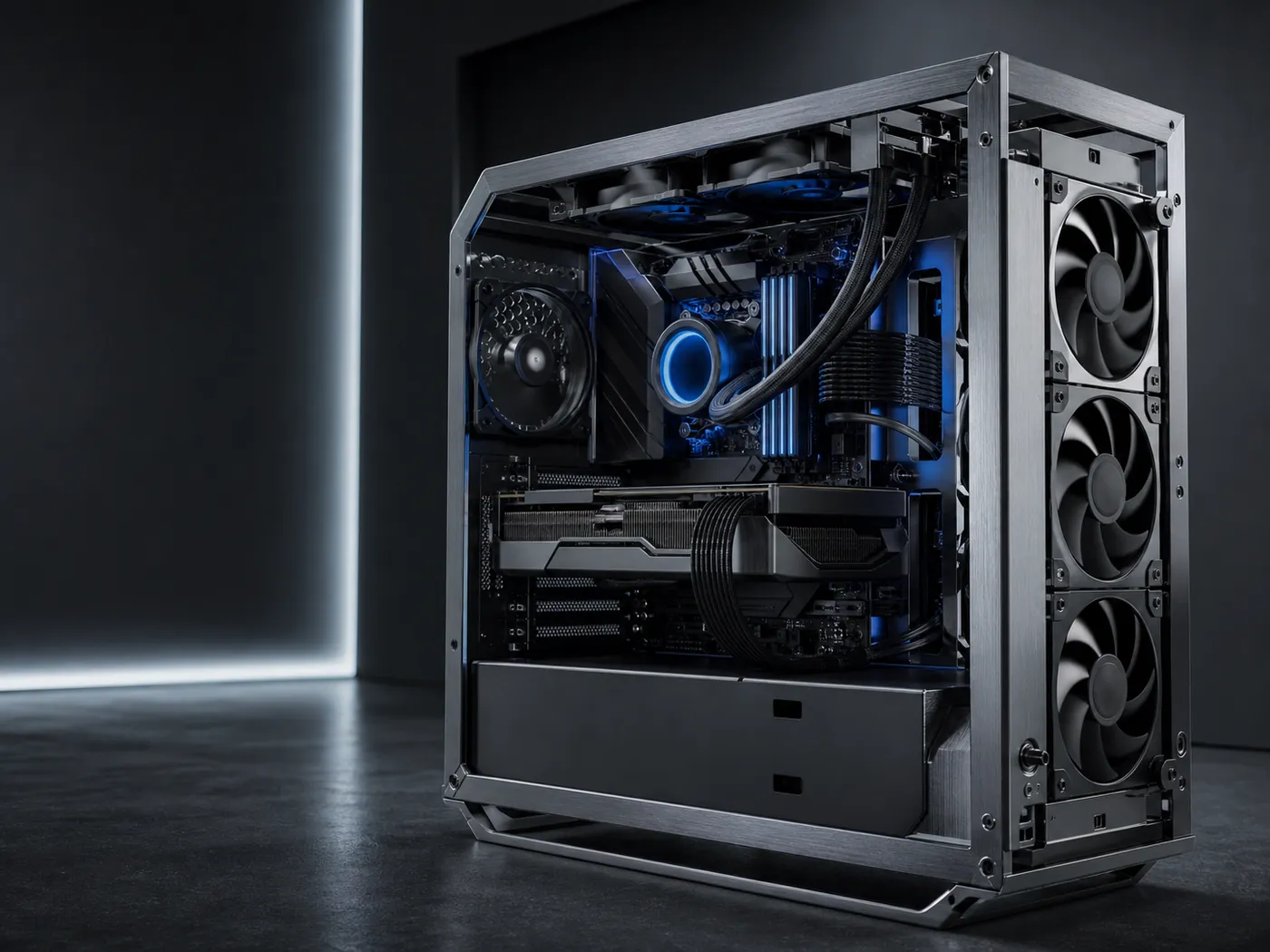
An explainable RAG PC-build agent over a 400-part catalogue with a real North American market layer: scheduled price sync twice daily, 30-day price history, and curated benchmarks that produce concrete numbers — Cyberpunk FPS, Llama tokens per second, Blender render seconds. The model parses intent and explains the result; deterministic rules pick the parts, so it can never invent a price or a component. Seven of its tools are exposed over MCP for other agents.
-
4.3
apple-liquid-glass-webgl npm · MIT
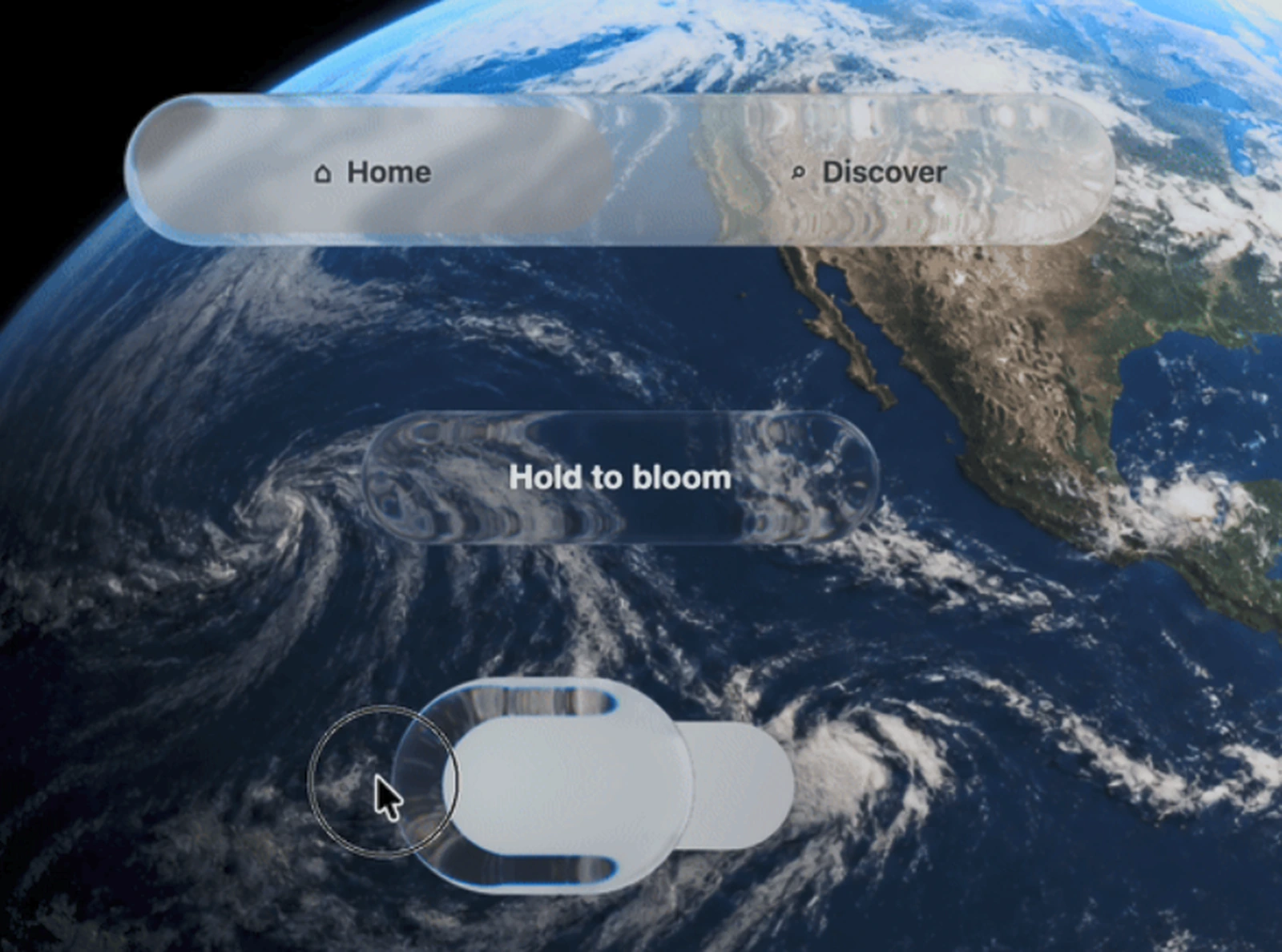
Reusable liquid-glass surfaces — screen-space refraction, variable blur, Fresnel reflection, chromatic dispersion, edge highlights, and contact shadows — shipped as two independent renderers: the frosted V1 model and the clear optical V2 model, usable side by side in one application.
-
4.4
apple-intelligence-glow-react npm
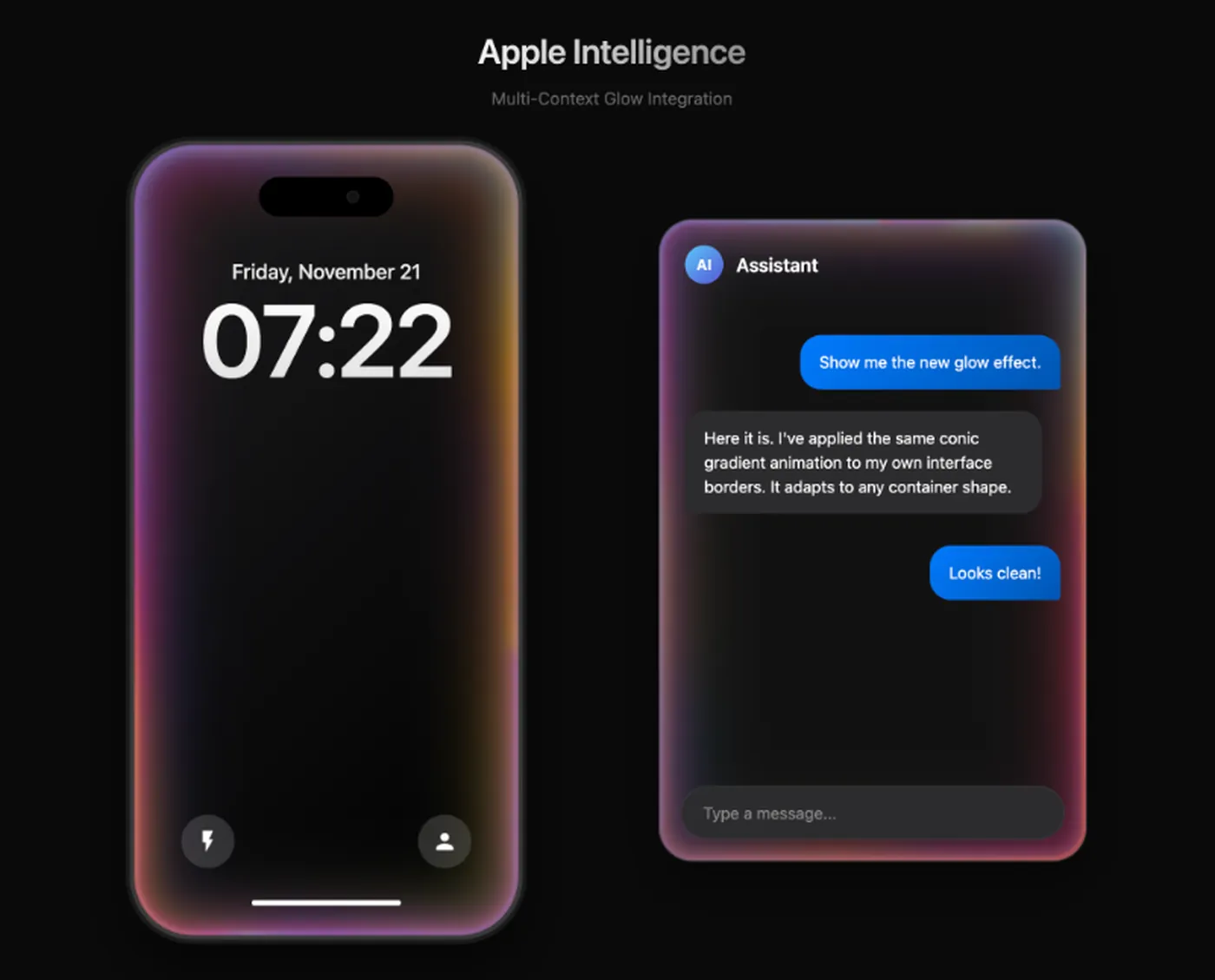
The Apple Intelligence glow border as a component you can wrap around any UI: layered blurred conic gradients, CSS injected once at runtime, content left entirely under the consumer's control.
-
4.5
PhysioApp Project lead
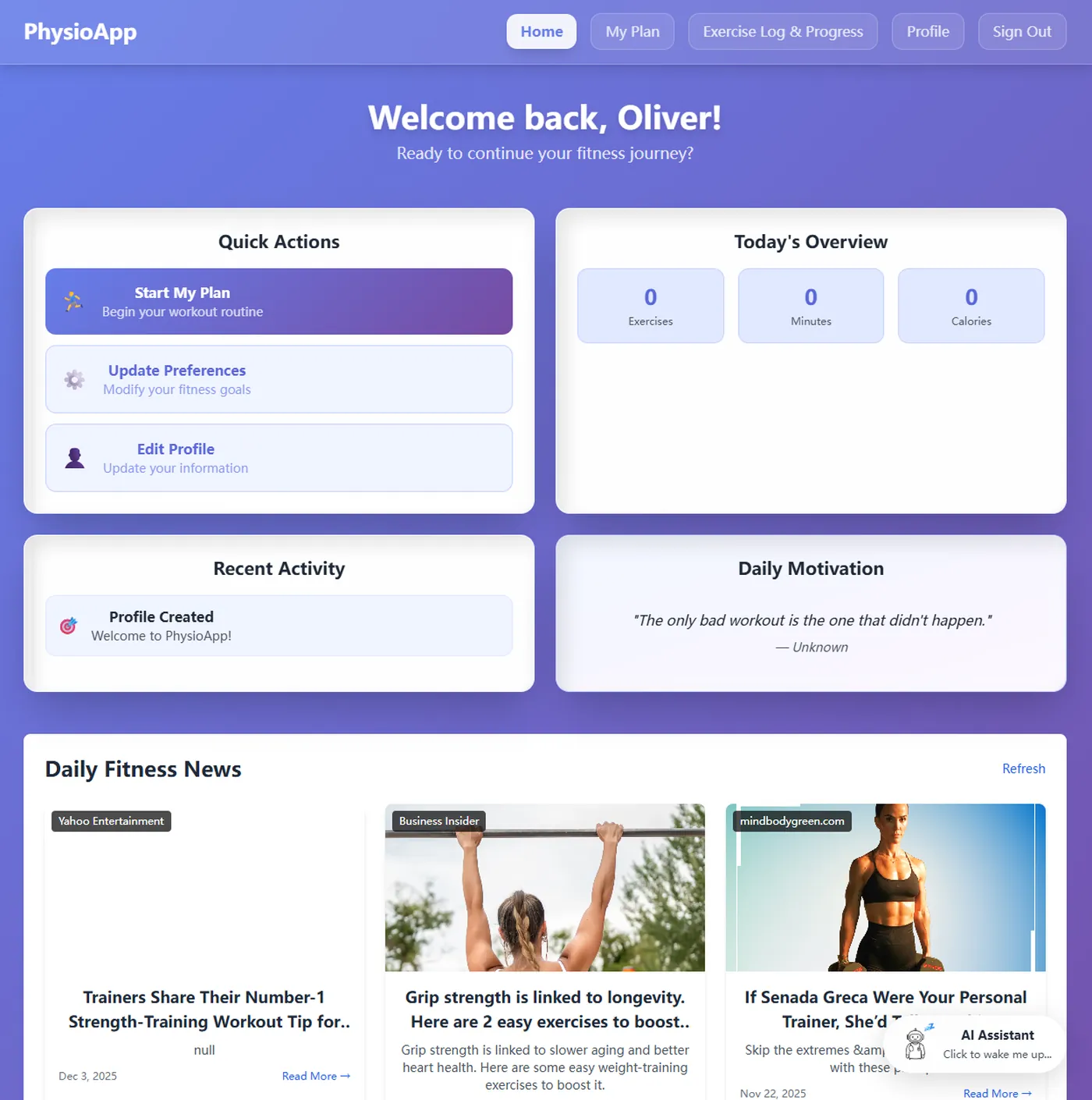
A full-stack fitness application generating personalised workout plans around users' injury conditions, with a DeepSeek R1 chatbot for real-time guidance, dynamic muscle highlighting, exercise tracking, and rehabilitation monitoring.
-
4.6
Painting emotion classification CSC311
Predicting the emotional register of a painting from survey data. Gaussian discriminant analysis, naive Bayes, decision trees, and a bagged neural network were implemented and compared under one evaluation protocol; the bagged network held 88.5% ± 2.4% cross-validated accuracy.

-
4.7
Aurora Loyalty Team project
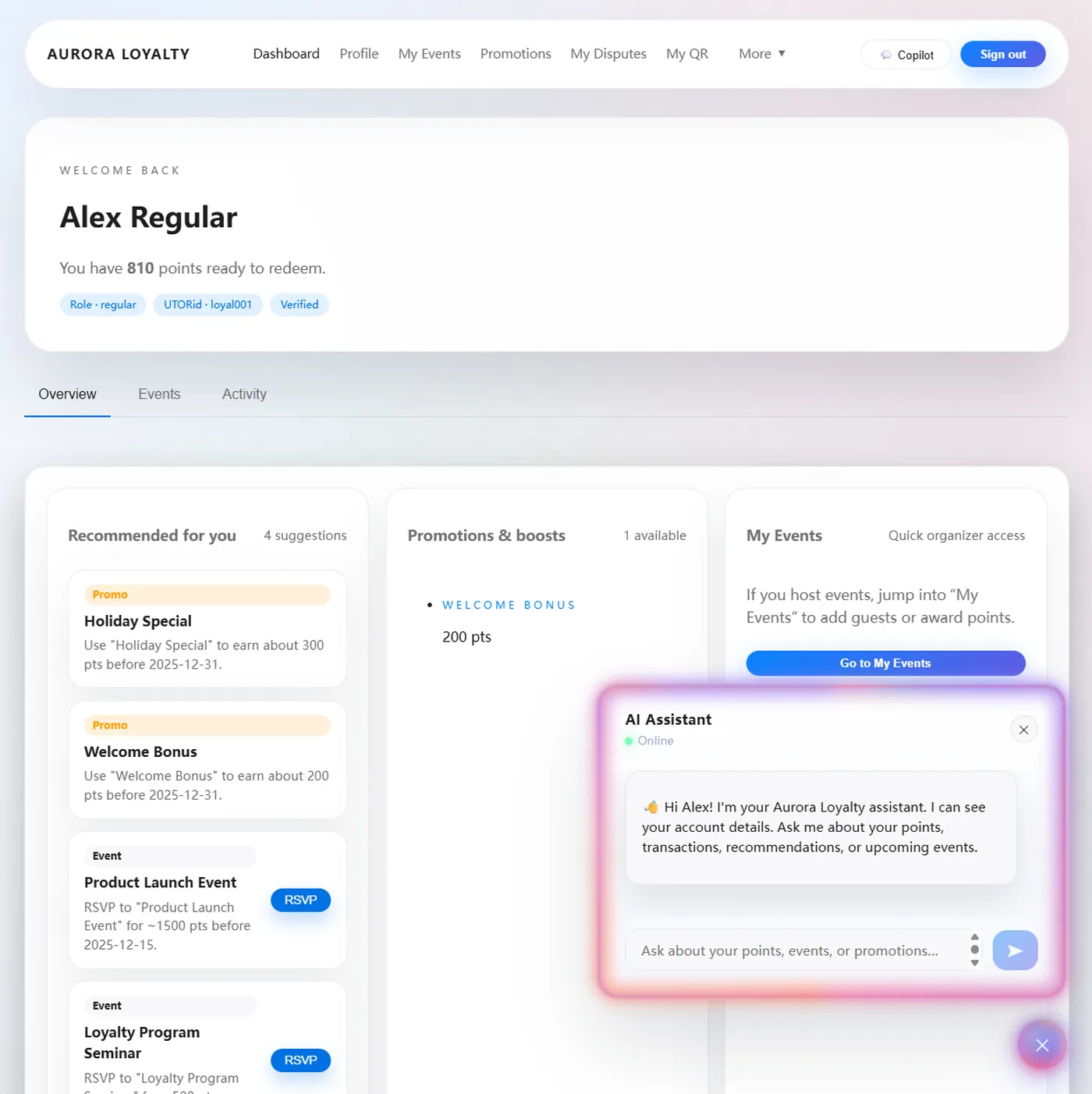
Points, promotions, and event RSVPs for members, with an in-product assistant that answers account questions and surfaces the offers a member is actually eligible for.
-
4.8
SDSS Datathon 2026 Participant
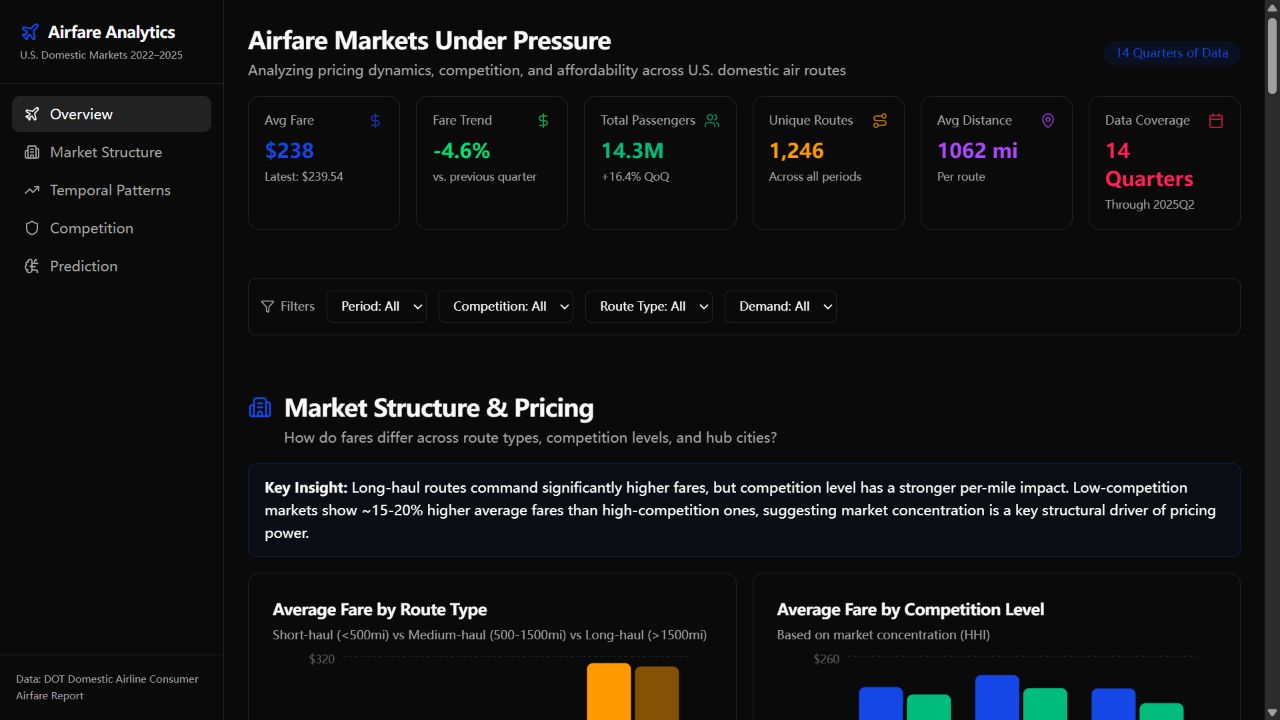
A competition dashboard reading airfare market behaviour under demand and capacity pressure.
Chapter 05Dusk